Tooth Extraction in Edinburgh
Sometimes a tooth is too decayed, damaged or infected to save, and removing it is the sensible option. At City Dental Care on Earl Grey Street, our dentists carry out routine (simple) extractions under local anaesthetic. The fee is confirmed in writing before anything starts, and appointments run until 8pm Monday to Thursday.
Transparent pricing
Extraction from £110Surgical extraction from £350
Your dentist confirms the fee in writing after examining the tooth, before anything is done.
When Does a Tooth Need to Come Out?
A dentist may recommend taking a tooth out when it can't be saved. Reasons include:
- Decay or damage that has left too little of the tooth to restore
- An infection or abscess where root canal treatment isn't possible
- A tooth loosened by advanced gum disease, one of the main reasons adults lose teeth
If the tooth can be saved, your dentist will say so: root canal treatment may let an infected tooth stay rather than be extracted, and we don't remove teeth that don't need removing.
Simple or Surgical Extraction: Which Do You Need?
This page covers routine (simple) extractions: a tooth that has come through the gum and can be gripped, loosened and removed in one piece.
A tooth that is partly under the gum or bone, or angled, usually needs a surgical extraction: a small cut in the gum, and sometimes a little bone removed or the tooth divided. Surgical extractions and all wisdom teeth are covered on our wisdom tooth removal page. The X-ray tells us which kind yours is before anything is booked.
In pain right now? Start with our emergency dentist page instead.
What Happens During a Tooth Extraction?
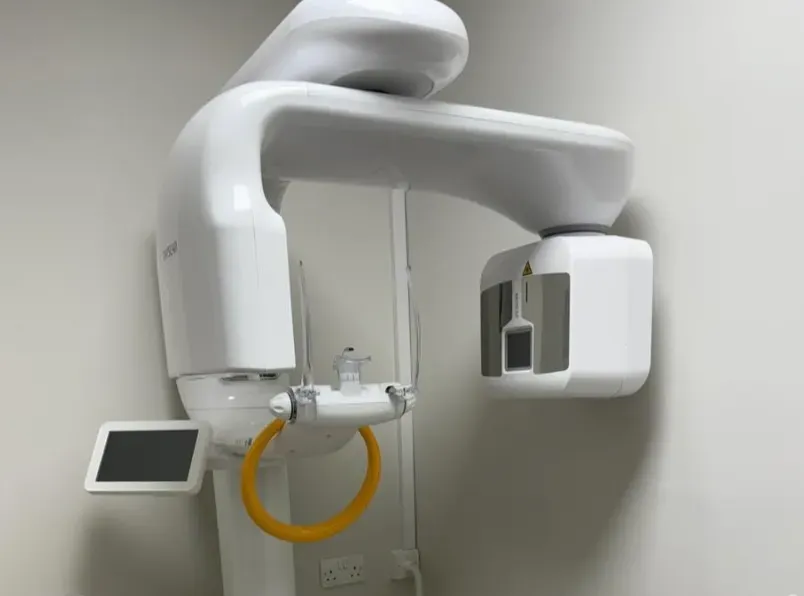
Examination and X-ray: the dentist checks the tooth and usually takes an X-ray to see its position and roots. OPG and CBCT imaging are in-house if a closer look is needed.
Your medicines: tell us what you take, especially blood thinners (anticoagulants). Only stop a medicine if your GP or another healthcare professional advises it.
Numbing: a local anaesthetic injection numbs the tooth and gum, and we check it has worked before we begin.
Removing the tooth: the dentist rocks the tooth to widen the socket, then lifts it out. For a straightforward tooth this can take just a few minutes.
Before you go: you bite on gauze to help a blood clot form in the socket, and your dentist gives you aftercare advice.
Does a Tooth Extraction Hurt?
The injection itself can cause some discomfort. Once the area is numb you shouldn't feel pain, but you may still feel pressure and movement as the tooth is loosened. If anything hurts, tell your dentist so they can give you more anaesthetic.
Afterwards, most people start to feel more comfortable after a few days, and the painkillers you'd take for a headache normally control any discomfort. Pain that gets worse instead of better is not normal: call us.
Nervous? Tell us when you book. The appointment is paced around you, and you can agree a stop signal with your dentist.
How Much Does a Tooth Extraction Cost?
Our private fee: Extraction from £110.
Your dentist confirms the fee in writing after examining the tooth, before anything is done. If the X-ray shows the tooth needs a surgical extraction, that is from £350, explained on our wisdom tooth removal page.
NHS patients: extractions are part of NHS dental care in Scotland, and urgent extractions are among the NHS treatments we provide for registered patients. NHS Scotland sets the charges: you pay 80% of the cost, capped at £384 for a single course of treatment, and under-26s, pregnant women and new mothers, and people on certain benefits pay nothing. An NHS emergency visit carries the NHS Scotland unscheduled care charge, currently £17.32, with any X-rays or treatment on the day charged on top at NHS rates. Your dentist tells you before any treatment whether it's NHS or private and what it costs. We're accepting new NHS patients.
Tooth Extraction Aftercare: The First Few Days
The first 24 hours matter most: the aim is to protect the blood clot that forms in the socket.
- For the first 24 hours, don't rinse or spit, smoke, drink alcohol or have hot drinks, and avoid strenuous exercise.
- While you're still numb, avoid hot food and drink so you don't burn or bite your cheek or tongue.
- Some oozing for a few hours is normal. If it bleeds, bite firmly on a clean, damp gauze or handkerchief for 20 minutes without checking, and repeat once if needed.
- From the next day, rinse gently with warm salt water (a teaspoon of salt in warm water) to keep the socket clean.
- Eat soft food for a few days, chewing with your other teeth. Keep brushing your other teeth as normal, and clean gently around the socket.
- For pain, take paracetamol or ibuprofen as directed on the packet. Don't take aspirin for the pain, as it can increase bleeding.
- Smoking during recovery makes infection, slow healing and dry socket more likely.
When to Call Us After an Extraction
Call 0131 228 2442, or 111 when we're closed, if you have:
- Bleeding that is still flowing freely after two rounds of 20 minutes' firm pressure
- Pain that gets worse after a few days instead of better, sometimes spreading towards your ear or with a bad taste or smell. This may be dry socket, where the blood clot is lost and the bone underneath is exposed. It can be very painful, but it can be treated: the dentist cleans the socket and may place a medicated dressing.
- Swelling that keeps getting worse, a high temperature, or discharge from the socket, which can be signs of infection
- Swelling spreading towards your eye or down your neck, or difficulty swallowing or breathing: call 999 or go to A&E
Replacing the Gap After an Extraction
Filling the gap can help you chew and speak properly, stop nearby teeth drifting into the gap and keep your bite balanced. It's your choice, and all three options are provided at the practice:
- A dental implant replaces the root as well as the tooth: from £1,450 including the crown, plus £149 for the CBCT scan and implant planning unless a suitable recent scan from elsewhere can be used.
- A dental bridge fixes a false tooth to the teeth either side: porcelain bridge (per unit) from £494.
- A denture is removable and can replace one tooth or several: dentures from £450.
Jaw bone recedes where a tooth is missing, which can affect implant planning later, so if an implant interests you, raise it sooner rather than later. Our guide to implants, bridges and dentures compares the three in full. 0% finance is available on private treatment from £250 up to £5,000, over 2 to 12 months.
Booking a Tooth Extraction in Edinburgh
Book online or call 0131 228 2442. We're at 9 Earl Grey Street, Edinburgh EH3 9BN, open 8:30am to 8pm Monday to Thursday and 8:30am to 5pm on Friday.
In pain now? A private emergency appointment is £85, including a prescription if needed, open to anyone and bookable online. NHS emergency appointments are for registered patients and are booked by phone. Any further treatment is quoted in writing before it's done.