Porcelain Veneers in Edinburgh
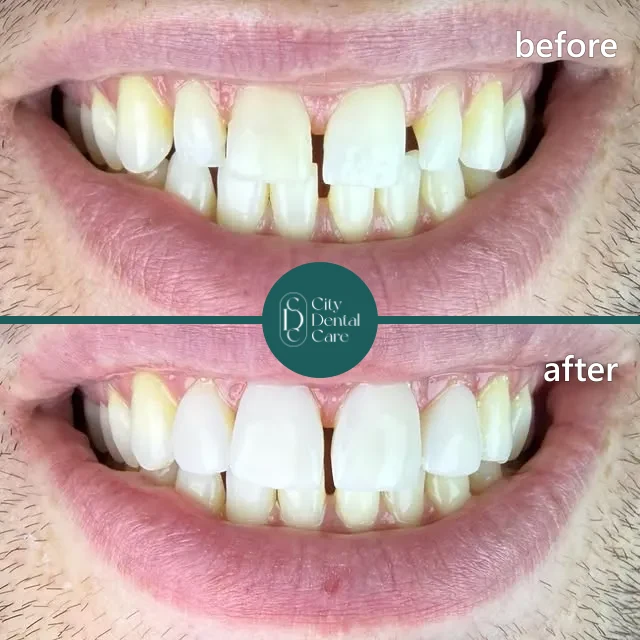
Porcelain veneers are thin ceramic shells, made individually for each tooth and bonded to its front surface to change its shape, colour and proportions. They are the type of dental veneer to consider for a lasting, natural-looking change when bonding won't hold up, or the teeth are worn or heavily discoloured (your dentist checks the cause of any wear first). At City Dental Care, on Earl Grey Street at Tollcross in central Edinburgh, we offer two kinds, porcelain veneers and Emax (lithium disilicate, a glass-ceramic) veneers, both planned digitally and made by a ceramist. Because preparing a tooth is permanent, we only recommend them when they are genuinely the right answer.
It starts with a free consultation with one of our dentists, who will tell you honestly whether veneers, or something less invasive, would get you the result you want. We take a deposit when you book, under our Failure to Attend policy, and it is refunded when you attend; we confirm the amount when you book. A free consultation is an initial consultation, not a full dental examination.
Transparent pricing
Porcelain veneers from £650 per tooth
Emax veneers from £750 per tooth
Bundle packages may apply for several teeth. 0% finance available on private treatment from £250 up to £5,000, over 6, 9, 10, 11 or 12 months.
Who Veneers Suit, and Who They Don't
Veneers can change:
- Deep discolouration that whitening won't shift
- Chipped, worn or uneven front teeth
- Shape and proportion — short, narrow or mismatched teeth
- Small gaps and mild irregularity (larger crowding is usually better straightened first)
They may not be the right choice, or other treatment may need to come first, if you:
- Grind or clench your teeth heavily, which puts veneers under strain; your dentist may suggest a night guard
- Have a deep bite, or too little room between your upper and lower teeth
- Have crowded or badly out-of-line teeth, which are usually better straightened first
- Have decay or gum disease, which is treated first
- Have teeth that are already heavily filled or weakened, where a crown may protect the tooth better
Your dentist checks all of this at your consultation, and will tell you if veneers aren't the right answer for your teeth.
Porcelain and Emax Veneers: What Ours Are Made Of
We offer two kinds of ceramic veneer: porcelain veneers, from £650 per tooth, and veneers made in Emax (lithium disilicate, a glass-ceramic), from £750 per tooth. Your dentist will tell you which suits your teeth, and your written plan says which you are having. Each veneer is a thin shell, made individually for its tooth by a ceramist to the shape and shade planned from your scan and photographs, then bonded to the front of the tooth. Ceramic holds its colour and surface well and mimics the translucency of natural enamel, so it suits a lasting, natural-looking change.
Veneers can also be built up from tooth-coloured composite resin, often called composite veneers. We do that as composite bonding: it usually needs little or no drilling and is easier to repair, but it can stain and chip sooner than ceramic.
Alternatives to Veneers
Because preparing a tooth for a veneer is permanent, it's worth knowing what else could get you the result you want. Your dentist will talk these through with you at your consultation.
Teeth whitening:
If colour is the main concern, teeth whitening may be enough on its own. Whitening only lightens natural teeth, so if you are having both, the teeth are whitened first and the veneers are matched to the new shade.
Composite bonding:
For chips, small gaps and uneven edges, composite bonding adds tooth-coloured material and leaves the enamel largely untouched. It is easier to repair than a veneer, but needs refreshing sooner.
Invisalign:
If the teeth are crowded or out of line, straightening them first with Invisalign clear aligners can mean less enamel needs removing, or that veneers aren't needed at all.
A crown:
A tooth that is heavily filled, broken or root-filled may need the fuller coverage of a dental crown rather than a veneer.
How Veneers Are Done, Visit by Visit
Most veneer treatment takes a consultation and then at least two treatment visits: one to prepare the teeth and one to fit the veneers, which are made by a ceramist in between, and then a review appointment. Your dentist will tell you how many visits your plan needs, and roughly how long it will take, before you commit to anything.
 Consultation:
Your dentist looks at your teeth, gums and bite and talks through what you want to change. A full digital scan of your teeth is usually taken, and x-rays if your dentist decides the treatment needs them. If bonding, whitening or aligners would get you there with less intervention, they'll say so.
Planning and trial smile:
Photographs and that scan are used to plan the shape and shade. In many cases a trial smile can be placed over your teeth so you can see the proposed result before any preparation; our digital smile design page explains how that works.
Preparation:
Your teeth are numbed with local anaesthetic and, where needed, a thin layer of enamel is removed; the prepared teeth are recorded with a scan or impression for the ceramist. Where needed, temporary veneers protect the prepared teeth while the final ones are made.
Made by a ceramist:
Your veneers are made individually to the plan, and your dentist will tell you when your fit appointment will be.
Fit and check:
The veneers are tried in and checked for fit, colour and bite before they are bonded and polished. You then come back for a review appointment, to check how your veneers and bite have settled.
Veneers at City Dental Care are planned and fitted by Dr. Feras Elbiss (GDC 303408; MDDr 2022, Charles University, Czech Republic), a dentist with postgraduate work in restorative and aesthetic dentistry, endodontics and occlusion, and by Dr. Amir Hussein Shahrbabaki (GDC 318837; BDS 2024, CEU Cardenal Herrera, Spain), a general dentist with a strong interest in cosmetic and restorative dentistry. Both are on the GDC register, and you can read more about them on our staff page.
Looking After Your Veneers
Veneers need the same daily care as natural teeth, because the tooth and gum around each one still need protecting:
- Brush twice a day with a fluoride toothpaste, and clean between your teeth every day
- Keep up your check-ups and hygiene visits, so the gums around your veneers stay healthy
- Don't bite your nails, chew ice or pens, or use your teeth to open things
- Wear a mouthguard for contact sports
- If you grind your teeth, wear the night guard your dentist recommends
If a veneer chips, feels rough or comes loose, keep any piece and call us on 0131 228 2442. A loose veneer can often be bonded back on.
Risks, and How Long Veneers Last
Like any dental treatment, veneers carry risks, and your dentist will talk them through before you decide:
- Sensitivity to hot and cold after preparation, which usually settles
- A veneer can chip, crack or come loose
- The edges can pick up staining over time, more so in smokers
- Occasionally the nerve of a prepared tooth becomes inflamed, and the tooth may then need root canal treatment
- Preparing a tooth is permanent, and veneers eventually need replacing
Looked after well, porcelain and Emax veneers commonly last ten years or more. That is a typical span rather than a promise: heavy grinding or clenching and root-filled teeth are linked with shorter lives, and how well you look after your teeth and gums matters too.
Why Have Veneers at City Dental Care?
Planned before prepared:
Digital planning and, in many cases, a trial smile, so you see the proposed result before anything permanent happens.
The price in writing, first:
Porcelain veneers from £650 and Emax veneers from £750 per tooth, published here and on our price list, with a written plan before treatment and 0% finance on private treatment from £250.
Honest advice:
Because preparation is permanent, we'll steer you to bonding, whitening or Invisalign first whenever they would achieve what you want.
A free consultation:
Find out what is possible for your teeth before you commit to anything. We take a deposit when you book, under our Failure to Attend policy, and it is refunded when you attend; we confirm the amount when you book. A free consultation is an initial consultation, not a full dental examination.
Central, with late opening:
The practice is open until 8pm Monday to Thursday (until 5pm on Friday), on Earl Grey Street at Tollcross, a short walk from Haymarket Station.
Paying for Your Veneers
Porcelain veneers are from £650 per tooth and Emax veneers from £750 per tooth, and if several teeth are being treated, bundle packages may apply. Your treatment and its cost are set out in a written plan before anything starts. See our full price list, or spread the cost with 0% finance on private treatment from £250 up to £5,000, repaid by monthly Direct Debit over 6, 9, 10, 11 or 12 months. Our guide to how much veneers cost in Edinburgh goes through what decides the total and what a quote should include.